

Irish fairies: the evil leprechaun
Is he just a misunderstood cheeky
chappie with a penchant for practical jokes?
Is he just a misunderstood cheeky
chappie with a penchant for practical jokes?
Of all the Irish fairies, the evil leprechaun, with his hot-temper and spiteful trickery, is probably the best-known internationally, closely followed by the Banshee.
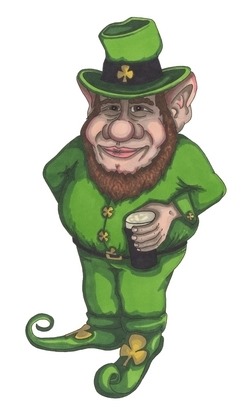
Unlike the screamer, who no one in their right mind wants to encounter, 'the little fella' has a rather mixed reception. Some would say he's misunderstood, more mischievous than evil. Others insist he's a thoroughly nasty piece of work, and best avoided.
And then there's another group who will set a lephrechaun trap to steal his pot of gold. Even the meekest little chap would turn into a spiteful evil leprechaun in the face of such harrassment.
Unlike the screamer, who no one in their right mind wants to encounter, 'the little fella' has a rather mixed reception. Some would say he's misunderstood, more mischievous than evil. Others insist he's a thoroughly nasty piece of work, and best avoided.
And then there's another group who will set a lephrechaun trap to steal his pot of gold. Even the meekest little chap would turn into a spiteful evil leprechaun in the face of such harrassment.
Not only is there much disagreement about his character, there is not even a concensus about where his name comes from.
The folklore writer W B Yeats believed that it derived from 'leith broghan' meaning the shoemaker. This might explain why the leprechaun has often been seen mending a brogue (always just the one shoe, never a pair!)
Others say the name comes from the Irish word 'luchorpan' meaning 'small bodied'.
Some
basic facts about the leprechaun
- Leprechaun legends have been around in Ireland for at least 1000 years. They stem from the Celtic belief in the Otherworld, a mythical place where magic powers can be used for good or evil.
- Leprechauns are solitary fairies. They prefer their own company and they're very rarely encountered in groups.
Leprechauns have fantastically good memories, but they tend to harbour grievances.
- Yes, there are female leprechauns, although they seem to be quite few in number. They're no more renowned for their manners or social graces than the male of the species.
- Many leprechaun legends feature a robin. This most common of birds is a great friend of the little fella, so don't kill or trap robins (even accidentally) unless you're looking for some bad luck.
- Leprechauns are usually described as being between two and three feet tall, very old and wrinkly, with a wide mouth, round eyes and a bulbous red nose.
Leprechauns have fantastically good memories, but they tend to harbour grievances.
Little People in America
Although the majority of leprechauns still live in the Emerald Isle, some hid themselves in the scant belongings of Irish emigrants and turned up in Australia and the USA.
Those that arrived in America have been rehabilitated over the last century or so, and the evil leprechaun has become a lot less cranky and more sociable.
It could be argued that he's become a lot more stupid in the process, having lost his sharp wit and inclination to mendacity.
Could be he also spends too much time in the pub these days. He's always been a bit keen on a drink, that's true, but while it's frothy beer in the States, his preference on this side of the pond remains whiskey or poteen, both of which he likes to brew up himself.
- When it comes to dress, the wee fellas are a bit old-fashioned and often shabby but they don't like too much uniformity. So you might come across one with a red coat, one with a green coat and another with a brown coat. Most wear a tall hat and hold up their trousers with a belt featuring a big buckle. Their shoes, which are superbly groomed and adorned with a silver buckle, typically have built-up heels because leprechauns are notoriously sensitive about their diminutive stature.
- The Little People are great distillers, having been given the secret of whiskey making by the legendary Tuatha. Some say their tendency to over-indulge in the home-brew is what makes them so belligerent and unpredicatable and turns even the friendliest wee chap into an evil leprechaun.
- Although they don't have formal qualifications, leprechauns are very intelligent. As well as being great poets, athletes, philosophers and musicians, they are also the accountants of the Otherworld. Their reputation for miserliness is to some extent unfounded. They are, in fact, the Irish Fairies' Treasurer, and they take their responsibility seriously. This is why they hide crocks of gold wherever they can find rainbows, and go to great pains to stop greedy mortals finding their stash.
Little People in America
Although the majority of leprechauns still live in the Emerald Isle, some hid themselves in the scant belongings of Irish emigrants and turned up in Australia and the USA.
Those that arrived in America have been rehabilitated over the last century or so, and the evil leprechaun has become a lot less cranky and more sociable.
It could be argued that he's become a lot more stupid in the process, having lost his sharp wit and inclination to mendacity.
Could be he also spends too much time in the pub these days. He's always been a bit keen on a drink, that's true, but while it's frothy beer in the States, his preference on this side of the pond remains whiskey or poteen, both of which he likes to brew up himself.
Where does the evil leprechaun reside in Ireland?
There are five 'clans' of leprechaun and they don't mix much. Which one you need to be on the lookout for depends on where you are in the island.
- The Leinster leprechaun most closely fits with the popular notion of the little fellow. They're the least flamboyant in dress, the least extrovert in character, and they're very keen on honey.
- The Ulster leprechaun is the shortest in stature, but it's best not to mention it. In addition to built up heels, they usually wear pointed hats to give the illusion of greater height. They claim to be the best poets and most accomplished hurlers.
- The Meath leprechaun's USP is his diplomacy. This is a good trait, but in the execution of his diplomatic skills he tends to use a hundred words when ten would do. Don't be in a hurry to run into him if you've not got time to spare.
- The Connaught leprechaun, like his brethren, is industrious, whether at work or at study. But this chap takes it all a bit too seriously. Although they say they are the best inventors and great philosophers, they are the most reclusive of the five so you're unlikely to get to test this claim.
- The Munster leprechaun is the wildest party animal you're ever likely to encounter. His drinking habits are legendary. When sober he has the sweetest tongue. When he in drink, he's simply horrible.
Find out more about

Irish fairy folk
In most cultures, fairies are sweet, good, beautiful creatures who grant unselfish wishes and cast spells to bring goodness and defeat badness.
Not so in Ireland.
Irish fairies are generally a pretty unattractive, nasty bunch. They are quick to anger, they drown humans, they steal babies (and eat them!), they spit on fruit and turn milk sour, and they play rotten tricks on the unsuspecting.
At one time, even the word 'fairy' was feared, in case it was overheard by one of the creatures and caused offence. Instead, a raft of alternative and more complimentary terms were used, such as The Little People, The Good People or The Gentry.
Among the most scary of the Irish fairies are the Sheerie, who cause madness and confusion in humans; the headless Dullahan who rides a horse and shouts the name of a mortal who will die; and the capricious Pooka who are especially common at Halloween.
Compared with some of his pals from the Otherworld, the supposedly evil leprechaun is quite meek. Sure he might play a trick on you, or simply ignore you, but he's just as likely to be friendly, tell you a joke or even offer some top-rate advice about the state of your shoes. You just never can tell.
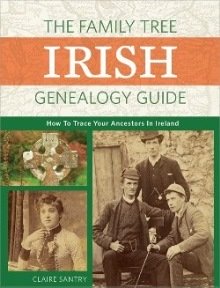
The Family Tree Irish Genealogy Guide
Written by the creator of Irish Genealogy Toolkit and Irish Genealogy News, 'The Family Tree Irish Genealogy Guide' is full of advice, tips and strategies to ease what can be a challenging journey.
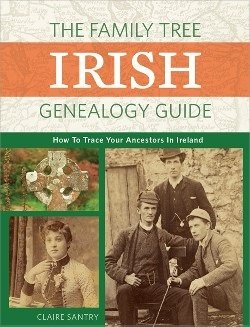
Its guidance will be useful to any researcher of Irish heritage, but especially for the target Irish-American researcher who's struggling to work back to Ireland from their immigrant ancestor.
Publisher: Penguin
ISBN: 9781440348808 / 240 pages.