- Home ›
- Irish Emigration
Irish emigration
... to America, Britain, Canada, Australia and beyond
See the full Contents of this emigration section at bottom of page
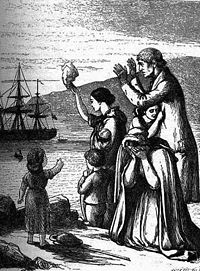
Irish emigration is a huge subject - historically, socially and genealogically. This is borne out by the fact that some 70million people around the world claim Irish descent. In the USA alone, there are thought to be about seven times more Irish-Americans than the current population of the island of Ireland.
There are two groups of genealogy researchers to whom emigration from Ireland is of interest:
- Those whose direct ancestors left the island and who wish to research their origins in Ireland
- Those who already know their origins in Ireland and wish to research ancestors and/or extended family who left Irish shores
To both
groups, I must first make clear that my experience is with Irish records, not
British, North or South American or Australian genealogy records. As such, it
is beyond my knowledge to explain how to conduct genealogy research outside
Ireland.
However, what you will find on this section of Irish Genealogy Toolkit will still be helpful to your family history research.
It includes useful background on the 'how and why' of Irish emigration, advice on locating and using passenger lists, an overview of the Irish immigrant experience in some countries, and a list of websites where you might start your research abroad.
If you are of Irish descent but do not live in Ireland, you need to work your family history back generation by generation until you 'find' your Irish immigrant ancestor. You then need to learn everything possible about that ancestor's life in his/her new home and to pinpoint their exact place of origin.
This genealogical research must be done in your own country before turning to Irish records. If you haven't yet begun this process, you will find these two pages particularly useful: Start Digging for your Irish Roots and Irish Ancestry: the hunt for the townland.
No centralised records of emigration exist in Ireland or Britain: Where passenger lists were created, they were kept by the port of arrival, not departure. Then, as now, the authorities were more concerned with those who were entering their country than those departing it.
No centralised records of emigration exist in Ireland or Britain: Where passenger lists were created, they were kept by the port of arrival, not departure. Then, as now, the authorities were more concerned with those who were entering their country than those departing it.
Irish Emigration in the 17th and 18th centuries
The earliest waves of Irish emigration date to the second half of the 17th century and the aftermath of the Cromwellian era. Most were Catholics. While significant numbers went voluntarily to settle in the West Indies, even more were transported there as slaves. The alternative route, which attracted many from counties Waterford and Wexford, was to Newfoundland.
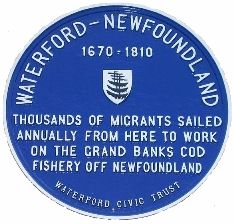
To the typical Irish Catholic of the 17th and 18th century, the very notion of emigration went against the old Celtic traditions of extended family and clan relationships.
To leave your family, and your homeland, was considered an unbearable exile. For this reason, an ambition to find a better life overseas did not trouble the majority of Ireland's population, no matter the poverty they currently lived in or the oppression they suffered as a result of their faith.
In any case, where would they go? Catholic emigration to North America was forbidden by law until after the War of Independence. And since most lived on the poverty line (at best), how could they afford to pay for their passage? For most Catholic Irish famiiies, emigration was simply not on the agenda. Those that found the means and chose to sever ties with the old country usually sailed from Cork or Kinsale and small settlements evolved along the eastern coast of what is now the United States.
In the northern counties of Ulster, however, a different attitude held sway with a sizeable proportion of people.
Presbyterians, most of whom had Scottish ancestry, had also suffered discrimination in Ireland but they were not inhibited to the same degree by 'ancestral' connection with the soil. They sincerely believed they would find tolerance, freedom and happiness in North America.
They were also, to varying extents, more economically independent than their Catholic neighbours. Many were artisans, shopkeepers, or young professionals, and some worked in the Irish linen trade.
These early waves of emigration from Ireland were often in response to economic peaks and troughs.
Up to 1720, when New England was the destination of choice for most, the flow was steady but numbers were not large. Numbers rose at the end of that decade and then dropped again.
A famine in the early 1740s saw renewed interest in Atlantic passage, and Irish emigration never really subsided afterwards. In 1771-1773, more than 100 ships left the Ulster ports of Newry, Derry, Belfast, Portrush and Larne, carrying some 32,000 Irish immigrants to America. Meanwhile, a similar number set sail from Dublin, Cork and Waterford alone. Some of these would certainly have been Catholics. By 1790, the USA's Irish immigrant population numbered 447,000 and two-thirds originated from Ulster.
Back in Ireland, the population had grown from only 2.3 million at mid-century to as much as 5 million by 1800. The vast majority lived in poverty.
See page 2: Irish emigration in the 19th century
Contents of Irish emigration section
To North America
► The coffin ships that brought disease and death with Irish immigrants to America and Canada.
► Canadian immigration history: the arrival of the Irish
► Canadian immigration records: where to find records of your ancestor's arrival and life in Canada
► An overview of US immigration records that may help you find your Irish immigrants in America.
► The journey to Ellis Island, New York. What was it like?
► Top tips for searching the Ellis Island immigration records database.
► Irish-American history to 1845
► Irish immigration to America, 1846 to the early 20th century.
To Britain
► An overview of Irish immigration to Britain.
► Irish immigration to England, and where to find the best genealogy resources.
► Irish immigration to Scotland and where to find the best genealogy resources.
Contents of Irish emigration section
To North America
► The coffin ships that brought disease and death with Irish immigrants to America and Canada.
► Canadian immigration history: the arrival of the Irish
► Canadian immigration records: where to find records of your ancestor's arrival and life in Canada
► An overview of US immigration records that may help you find your Irish immigrants in America.
► The journey to Ellis Island, New York. What was it like?
► Ellis Island immigration records: Top tips for searching the database.
► Irish-American history to 1845
► Irish immigration to America, 1846 to 1900s.
To Britain
► An overview of Irish immigration to Britain.
► Irish immigration to England, and where to find the best genealogy resources.
► Irish immigration to Scotland and where to find the best genealogy resources.
The American Wake
The mixed emotions surrounding the departure of an Irish emigrant were difficult for both the emigrant and his/her family and friends to contain.
On the one hand was the possibility of a better life: a healthier, more prosperous and fulfilling life than Ireland could offer.
On the other was the deep sorrow of knowing that, in all likelihood, the emigrant would never see the homeland, or these family and friends, again.
The American Wake was the party held on the night before departure. A typical Irish party, it involved food, drink, music, singing, dancing, and storytelling - often tales about the emigrant when caught in some mischief or in doing some kindness.
The practice was not dissimilar to the Wake held after a death except that, instead of accompanying the dearly departed to the churchyard, friends and relatives would accompany the emigrant on at least the first stages of their journey to the port. There the final farewells would be said.
During the Famine, the wake was toned down, if held at all.
The Family Tree Irish Genealogy Guide
Written by the creator of Irish Genealogy Toolkit and Irish Genealogy News, 'The Family Tree Irish Genealogy Guide' is full of advice, tips and strategies to ease what can be a challenging journey.
Its guidance will be useful to any researcher of Irish heritage, but especially for the target Irish-American researcher who's struggling to work back to Ireland from their immigrant ancestor.
Publisher: Penguin
ISBN: 9781440348808 / 240 pages.

The American Wake
The mixed emotions surrounding the departure of an Irish emigrant were difficult for both the emigrant and his/her family and friends to contain.
On the one hand was the possibility of a better life: a healthier, more prosperous and fulfilling life than Ireland could offer.
On the other was the deep sorrow of knowing that, in all likelihood, the emigrant would never see the homeland, or these family and friends, again.
Very few Irish immigrants to America, Canada, Australia and New Zealand ever returned to their homelands.
So the
use of the term 'Wake' was symbolic; just as the dead did not return, nor would
the emigrant. The loss was permanent.
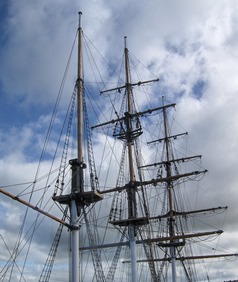
The American Wake was the party held on the night before departure. A typical Irish party, it involved food, drink, music, singing, dancing, and storytelling -- often tales about the emigrant when caught in some mischief or in doing some kindness.
The practice was not dissimilar to the Wake held after a death except that, instead of accompanying the dearly departed to the churchyard, friends and relatives would accompany the emigrant on at least the first stages of their journey to the port. There the final farewells would be said.
During the Famine, the wake was toned down, if not held at all.
Essential reading for Irish-Americans
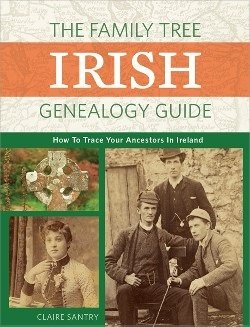
Written by the creator of Irish Genealogy Toolkit and Irish Genealogy News, The Family Tree Irish Genealogy Guide is full of advice, tips and strategies to ease what can be a challenging journey.
Its 240 pages of guidance will be useful to any researcher of Irish heritage, but especially for the target Irish-American researcher who's struggling to work back to Ireland from their immigrant ancestor.
Publisher: Penguin. ISBN:9781440348808
Click/tap image to find out more.