![]() |
![]() |
![]() |
Irish namesTraditional Irish names. Naming conventions. Irish last names. List of Irish names.There's something about Irish names – both first names and last names – that people the world over find compelling. And it's not just those with direct connections to Ireland who are fascinated by them.
The very concept of Irish names evokes the Celts and their rich legacy of glorious myths and folklore, fabulous art and music and their beautiful Gaelic language. From this Gaelic language (which is known in Ireland as Irish, not Gaelic) came wonderfully arousing Irish names such as Conn Cetchathach, Eochaid Iarlaithe, Cormac mac Airt and Ruaidrí Ua Canannáin. These are the names that history has recorded, but the ordinary Celts – those who didn't spend their lives going off on epic adventures or slaying aggressors – would have had equally colourful names. These names were an integral part of the Celtic culture which dominated most of Ireland until the 18th century. Only then did its light begin to weaken, as you'll see in the brief History of Irish names below. There's a lot of Irish heritage wrapped up in the names of our ancestors, so enjoy finding out more on this fascinating subject.
Irish surnames
Irish names for boys
Irish girls names
Miscellaneous names features
A history of Irish names The origin of Irish names lies in the Gaelic language of the ancient Celts who were pushed back from central Europe to the very western fringes of the continent by the spread of the Roman Empire. Unlike Scotland, Wales and Brittany, the other significant Celtic strongholds, Ireland was never conquered by the Romans so the Celtic way of life and their Gaelic language went largely undiluted by outside influence for hundreds of years. This language created it own unique names. By the late middle ages, Mór was by far the most popular name for a girl. Other common names were Sadb, Gormlaith, Finnguala, Der bForgaill and Órlaith. Men at this time were called Cormacc, Brecc, Dícuill, Brian, Comán, Conall, Selbach and Conchobar. ![]() With the arrival of the Anglo-Normans in the 12th century, a number of continental names were added to the mix, and given an Irish flavour. So male names, for example, Edmond, Nicholas and Willhelm, became Émann, Cóilín and Uilliam. Among the female names, Jehanne became Síban, while Isabel became Síbeal and Alice became Ailis. Although the Anglo Normans brought a different language and new influences, their impact was not initially felt much beyond Dublin and a few coastal towns, despite their best endeavours. The Governor sent by the English throne could introduce new laws against native Irish habits of dress, customs and language as much as he liked; more than three-quarters of the country ignored them. It wasn't until the very end of the 1600s, when Protestant William of Orange (subsequently King William) won a victory for the English by defeating the Catholic Irish forces, that English domination and influence started to trickle out into the hinterland and touch on the native way of life. It was hardly felt at all, to begin with, and the overwhelmingly Celtic culture of the native Irish, was to continue to be dominant in the countryside for another 200 years. But little by little, the English language, English culture and English names began to make inroads. Attempts were made to respell the names of the locals so that they'd be easier for English speakers to read and pronounce. If a spelling change didn't do the trick, a translation would be made. Sometimes these translations were decidedly odd, and they also differed from place to place. So, men called Áedhán, Cóilín, Domnall, Émann, Eogan and Uilliam would become Aidan, Colin, Daniel, Eamonn, Owen and William. At least there is some thread of the original name in the anglicised version. That can't be said for all the translations. How the Irish name Finnguala became Penelope, how Calbhach and Cormac became Charles and how Tairdelbach became either Charles or Terence remains a mystery. The same lack of explanation applies to the anglicisation of Síban (Siobhán in modern Irish). This name was anglicised to Susan or Judith in the north of Ireland but to Susanna, Julia, Jude and Nonie in the south and west. The anglicisation of Irish names and culture was helped in no small way by the introduction of laws which outlawed the Irish language and imposed English. My paternal great grandfather, William, born 1826, would have spoken Irish as his first language and would have been among the first to have received compulsory primary school education when it was introduced in the 1830s. English was the only language of instruction. Like him, all the young pupils would probably have had anglicised names by this time. His grandson, Timothy, born 1878, used to tell the tale of how William found himself up before the beak for having Irish words on the side of the cart he used to transport eggs to Rosscarberry market. He told the magistrate the words contained only his Irish name, and for this reason he was let off with a small fine and an order to replace it with English spelling. The story goes that the Irish words in fact contained some unflattering views of the English occupation. My grandad loved this tale. I imagine he learned it at William's knee. Throughout William's lifetime (he died in 1903) the use of Irish declined rapidly. At the beginning of the 1840s, about half the population spoke it. Just ten years later, that proportion had halved, and by the last decade of the century, it seemed that the Irish language was in danger of dying out. By 1891, less than 15% of the population of Ireland could speak it and Irish names had been almost completely swept away. But at about this time came a revival of interest in the language, amid concerns that the 'anglicisation' of Ireland would cause the Irish to completely lose a sense of a separate nationality. The catalyst for the revival was the formation of the Conradh na Gealige, the Gaelic League, in 1893 in Dublin. This League was, and still is, dedicated to the revival of the Irish language, and although it struggled to find popularity initially, the organisation managed, in 1903, to persuade politians to include Irish as part of the school curriculum and to have St Patrick's Day made a national holiday. A teacher training college, specifically for the teaching of Irish, was set up in Ballingarry, co. Limerick, also.
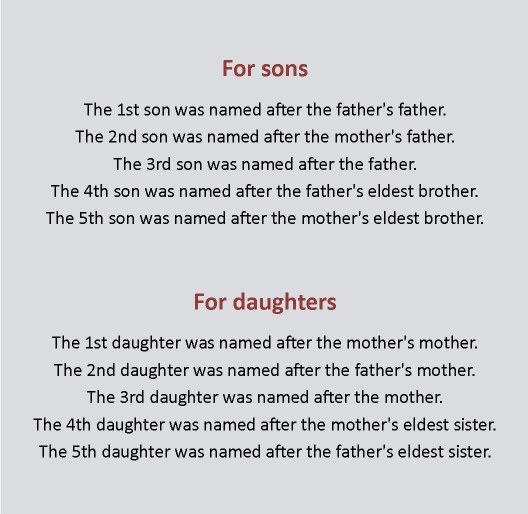
Two years later the Post Office agreed to deliver letters written in Irish, and an old law, prohibiting shopkeepers from displaying their names in Irish on their shopfronts, was removed from the statute books. Other obstacles were also torn down, and there followed a renewal of interest in Irish personal names. Although names such as Kevin and Brendan came back into vogue in the first half of the 20th century, these were still the anglicised versions of Irish names. The re-emergence of traditional Irish names – in Irish – didn’t begin until about thirty or forty years ago when many people whose names had been anglicised for several generations, started to discover and even choose to return to the original or a modern Irish form. This process has speeded up in some parts of Ireland in the last twenty years. Orlaith is again one of the most popular Irish girls names. Sean is the second most popular name for boys. In school classrooms across Ireland today, you can once again hear the music of Irish names such as Finnbarr, Ciarán, Diarmaid, Aoife, Clíona and Emer. Old Irish naming conventions Names for sons The 1st son was named after the father's father.
Names for daughters
Understanding old Irish naming conventions can be helpful to Irish genealogy researchers. Just bear in mind that these conventions were not necessarily adhered to by all families all the time. However, most families in the 18th and 19th century did follow tradition when a child was born, with the result that the same names tend to be repeated generation after generation. While this can cause some confusion when researching your ancestors, a likely 'mix' of first names can be helpful when faced with a choice of families with the same Irish surname. Although the practice has now been largely abandoned, it is surprising just how recently it was still in use. Certainly the 10 siblings of my grandfather, Edmond Tierney, born 1903, were all named according to the convention (he, as second son, was named after his maternal grandfather, Edmond Tobin), but there was a lot of deviation from the pattern when he and his brothers and sisters became parents in the 1930s and 1940s.
Where next? Use the links above to explore the fascinating subject of Irish names more deeply. Find out more about the Irish civil registration system (which recorded names for posterity from 1845). Return from Traditional Irish names to Irish Genealogy Toolkit's Homepage. |
The Gaelic languageThe Gaelic language of the Celts is found in Ireland, Scotland and the Isle of Man. In Ireland, the language is known as Irish. In Scotland it is known as Scottish Gaelic. In the Isle of Man it is known as Manx.
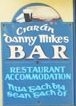
Identity capersIn certain localised areas, some family names have become extremely common. To ensure correct identification, Irish speaking areas still resort to an archaic practice that sees the father, grandfather and even great grandfather tagged on to the first name. For example, on Cape Clear, an island eight miles from the Cork coastline, Ciarán is the local saint and a common boys' name. This is why you'll find the local pub, run by the O'Driscoll family, is named Ciaran Danny Mike's.

The boy's name BranBran, meaning 'raven', was one of the most popular Irish names up to the beginning of the medieval age. It was particularly popular among the O Byrnes. There are many tales of warriors and others called Bran in Celtic lore, among them Bran mac Febail who features in the 8th century tale called Journey to the Land of Women, and real men, too, including Bran Finn, son of Maelochtraigh and king of the Deisi of Munster, who died in about 670.
The Celtic Cross![]() The ubiquitous Celtic Cross, a legacy of the culture that dominated Ireland for hundreds of years. Find out more about these Irish symbols.
The girl's name MaryIn the late medieval period, Mór was easily the most popular of Irish names for girls. Though a short name, it means 'tall' or 'great'. Two queens of Ireland bore this name in the 10th century, as did the daughter of Domnall mac Lochlainn, King of the North, who married Tairdelbach Ua Conchobair, king of Ireland. In the 15th century, Mór, daughter of O Carroll, married the earl of Desmond. The name was translated into Latin as Morina which in turn was anglicised as Martha or Agnes, but during the 19th century it was translated directly from Irish as Mary. Having been popular throughout the centuries as Mór, the name continued to be widely given in its new form and by the mid 1800s, it was the given name of about one-third of all Irish girls. An idiosycracy of the name is that it soon came to appear in standard combinations, usually as Mary Ann or Mary Jane.
This was unusual because until the third or even fourth quarter of the 19th century, few Irish babies received more than one Christian name.
Most famous Irish name?Thanks to the song 'Cockles and Mussels', Molly Malone is probably one of the most instantly recognised Irish names around the world. But don't be thinking she might appear in your genealogy, even if your surname is Malone. There's no evidence to suggest she was anything other than a figment of the song writer's imagination. |
||||
|
|
|||||
|
| Home Page | Disclaimer | Contact |Sitemap|Privacy Policy|
Copyright©
2008-2010. Irish Genealogy Toolkit. Dedicated to helping YOU discover your Irish Heritage.
|
|||||


The island is prime O'Driscoll country.
So over the years, a good few Ciarán O'Driscolls have lived on this small scrap of land.