- Home ›
- Civil Registration, overview ›
- Registration Districts
Ireland's civil registration districts
How to identify your ancestor's local district
When Ireland's civil registration system was first set up in the 1840s, its island-wide network of local district offices were known as Superintendent Registrar's Districts (SRDs). They had identical boundaries to Poor Law Unions (PLUs), and each was centred on a market town.
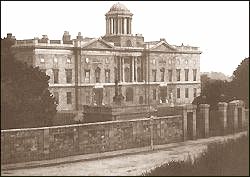 From 1844 to the 1870s, the General Register Office (GRO) of Ireland was located in King's Inn, Dublin.
A number of
Dispensary Districts (so called because they also had medical functions)
were also set up to handle registration needs in outlying areas of each
SRD.
The birth, marriage and death registers produced by each Dispensing Registrar were then gathered together at SRD level and sent to the General Register Office in Dublin.
There, copies were made of the registers, and all-Ireland civil registration Indexes were produced.
Kings Inn, Dublin. The old General Register Office (GRO).Unless a researcher is lucky enough to have ancestors with an uncommon surname, most Irish genealogists will need to have at least some idea of where their family lived in order to identify the correct entries in the birth, marriage and death Indexes.
If you don't know where your ancestors lived, see the Townland of Origin page.
If you know the county, town or locality where your family lived, you can either:
- Use the Map below to ascertain the PLU/SRD for the locality.
- Try searching Shane Wilson's free online Registration District Map; it not only identifies the PLU/SRD for each county, but also shows the location of their Dispensary Districts.
If you know the name of the townland where your ancestor lived, you can either:
- Consult the Alphabetical Index to the Towns, Townlands and Parishes of Ireland (a book held by the National Archives of Ireland and the National Library of Ireland, and by major libraries around the world) to find the name of the relevant Poor Law Union (PLU), or
- Check the free online Townlands Database.
Alphabetical by county: civil registration districts
(PLUs/SRDs)
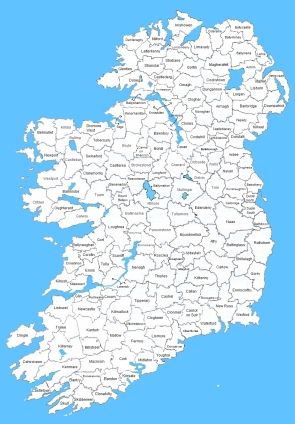
Click to study larger maps of:
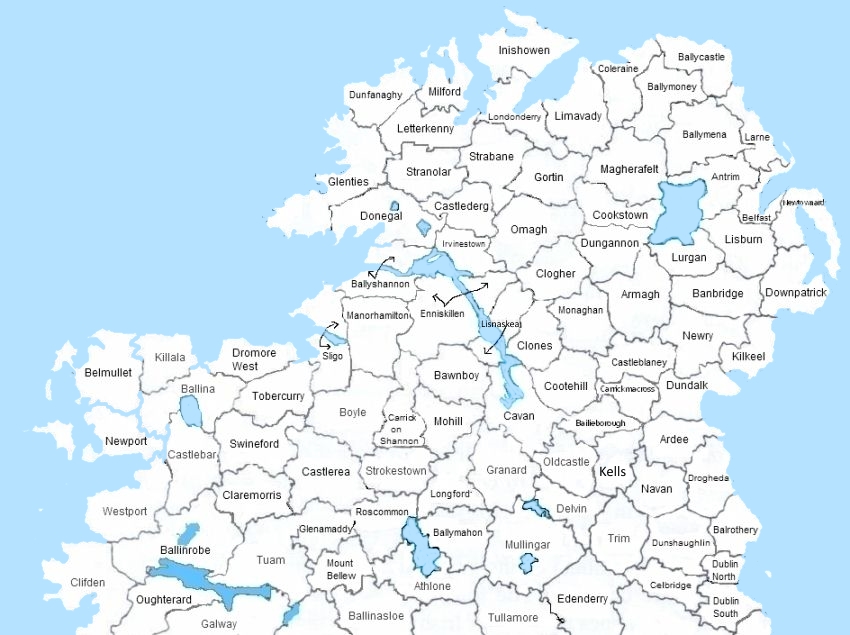
► Northern half of Ireland civil
registration districts
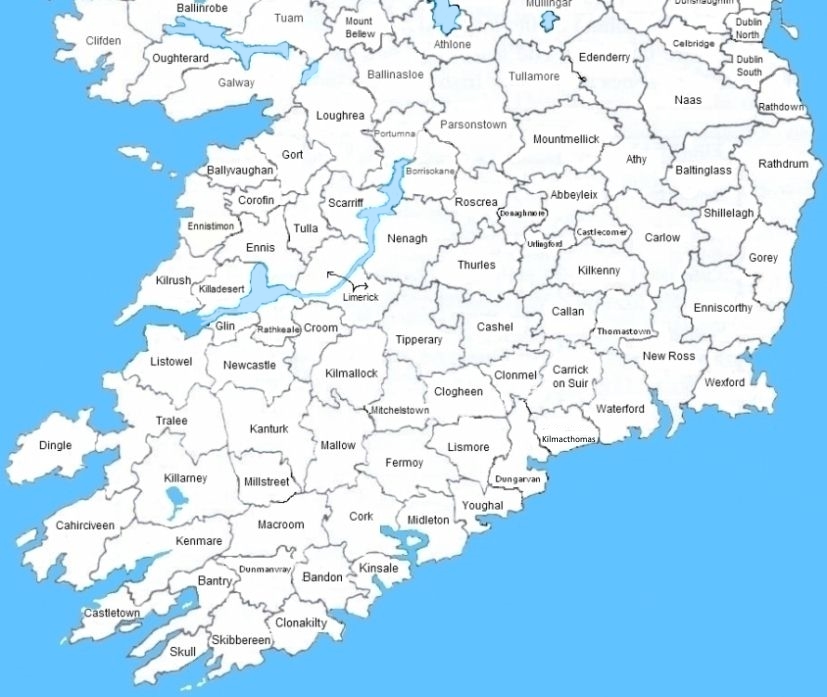
► Southern half of Ireland civil
registration districts
Click to study larger maps of:
► Northern half of Ireland civil
registration districts
► Southern half of Ireland civil
registration districts
Antrim: Antrim, Ballycastle, Ballymena, Ballymoney, Belfast, Coleraine, Larne, Lisburn, Lurgan.
Armagh: Armagh, Banbridge, Castleblaney, Dundalk, Lurgan, Newry.
Carlow: Baltinglass, Carlow, Enniscorthy, New Ross, Shillelagh.
Cavan: Bailieborough, Bawnboy, Cavan, Cootehill, Enniskillen, Granard, Irvinestown, Kells, Lisnaskea, Oldcastle.
Clare: Ballyvaughan, Corrofin, Ennis, Ennistimon, Killadysert, Kilrush, Scarriff, Tulla, Limerick.
Cork: Bandon, Bantry, Castletown, Clonakilty, Cork, Dunmanway, Fermoy, Kanturk, Kilmallock, Kinsale, Macroom, Mallow, Middletown, Millstreet, Mitchelstown, Skibbereen, Skull, Youghal.
Derry: Ballymoney, Coleraine, Derry (Londonderry), Limavady, Magherafelt, Newtown.
Donegal: Ballyshannon, Derry (Londonderry), Donegal, Dunfanaghy, Glenties, Inishowen, Letterkenny, Milford, Strabane, Stranolar.
Down: Banbridge, Belfast, Downpatrick, Kilkeel, Lisburn, Lurgan, Newry, Newtownards.
Dublin: Balrothery, Celbridge, Dublin
North, Dublin South, Dunshaughlin, Rathdown.
Fermanagh: Ballyshannon, Clones, Enniskillen, Irvinestown, Lisnaskea.
Galway: Ballinasloe, Ballinrobe, Clifden, Galway, Glenamaddy, Gort, Loughrea, Mountbellew, Oughterard, Portunna, Roscommon, Scarriff, Tuam.
Kerry: Cahirsiveen, Dingle, Glin (dissolved after 1892 and split between Listowel and Rathkeale in co. Limerick), Kenmare, Killarney, Listowel, Tralee.
Kildare: Athy, Baltinglass, Celbridge, Edenderry, Naas.
Kilkenny: Callan, Carrick-on-Suir, Castlecomer, Kilkenny, New Ross, Thomastown, Urlingford, Waterford.
Kings: see Offaly
Laois (Queens): Abbeyleix, Athy, Carlow, Donnaghmore (dissolved after 1887 and split between Roscrea and Urlingford), Mountmellick, Roscrea, Urlingford.
Leitrim: Ballyshannon, Bawnboy, Boyle, Carrick-on-Shannon, Castlerea, Manor Hamilton, Mohill, Roscommon, Strokestown.
Limerick: Croom, Glin (after 1892 split between Listowel and Rathkeale), Kilmallock, Listowel, Mitchelstown, Newcastle, Rathkeale, Tipperary.
Londonderry: see Derry
Longford: Ballymahon, Granard, Longford.
Louth: Ardee, Drogheda, Dundalk.
Mayo: Ballina, Ballinrobe, Belmullet, Castlebar, Castlereagh, Claremorris, Killala, Newport (included in Westport after 1886), Swineford, Westport.
Meath: Ardee, Celbridge, Drogheda, Dunshaughlin, Edenderry, Kells, Navan, Oldcastle, Trim.
Monaghan: Carrickmacross, Castleblayney, Clogher, Clones, Cootehill, Dundalk, Monaghan.
Offaly (Kings): Edenderry, Mountmellick, Parsonstown (Birr), Roscrea, Tullamore.
Queens: see Laois
Roscommon: Athlone, Ballinasloe, Boyle, Carrick-on-Shannon, Castlereagh, Roscommon, Strokestown.
Sligo: Ballina, Boyle, Dromore West, Sligo, Tobercurry.
Tipperary: Borrisokane, Callan, Carrick-on-Suir, Cashel, Clogheen, Clonmel, Nenagh, Parsonstown, Roscrea, Thurles, Tipperary, Urlingford.
Tyrone: Armagh, Castlederg, Clogher, Cookstown, Dungannon, Enniskillen, Gortin (dissolved after 1899 and split between Omagh and Strabane), Irvinestown, Omagh, Strabane.
Waterford: Carrick-on-Suir, Clonmel, Dungarvan, Kilmacthomas, Lismore, Waterford, Youghal.
Westmeath: Athlone, Ballymahon, Castletown, Delvin, Granard, Mullingar, Tullamore.
Wexford: Enniscorthy, Gorey, New Ross, Shillelagh, Wexford.
Wicklow:Baltinglass, Naas, Rathdown, Rathdrum, Shillelagh.
Where next?
- It's helpful to be aware of other administrative Irish land divisions and how these impact your family history research.
- Find out how to access Ireland's civil registration records of birth, marriage and death.
- Don't know the townland where your ancestors lived? Some strategies to further your Irish family history quest.
Where next?
- It's helpful to be aware of other administrative Irish land divisions and how these impact your family history research.
- Find out how to access Ireland's civil registration records of birth, marriage and death.
- Don't know the townland where your ancestors lived? Some strategies to further your Irish family history quest.

Need to register a birth, marriage or death?
Republic of Ireland civil registration offices: addresses, phone numbers & opening hours.
Northern Ireland civil registration offices: addresses and emails, phone numbers, and opening hours.

Related pages and Brief overview
Did all the Irish records burn?
The short answer to the question is No, but the truth is a bit more complicated, because much of Ireland's genealogical heritage did, indeed, go up in flames at the Public Records Office in 1922.
Discover which records burned, and which survived, and how this may impact your Irish family history research: